
Ghost editor of a controversial Bible makes 365 changes and turns reprint into a new edition
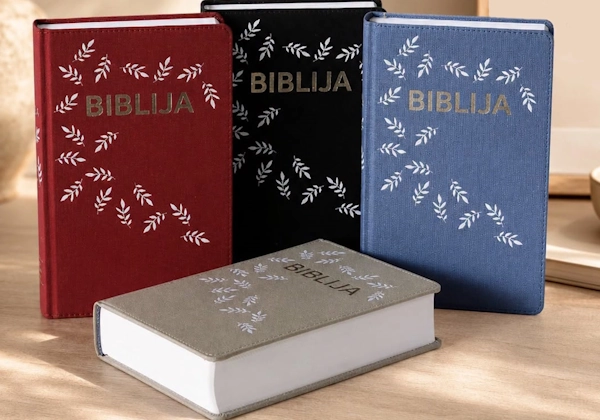
Research on the third edition of the Croatian Bible Society’s Bible in 2026 revealed that 365 significant text changes were introduced, transforming what was marketed as a “reprint” into a new, heavily edited version. The changes, which impact 76% of the pages, were made without a designated editorial board, raising concerns about transparency and editorial accountability.
The following is an abbreviated English translation of the analysis published in Croatian on July 22, 2026. The third edition of the Croatian Bible Society Bible, printed in South Korea and released on 3 July 2026, appeared almost silently, without official notice from the publisher and without clear bibliographical and editorial markings that would accompany such an important publishing venture.
Instead of transparent communication and editorial responsibility, the public learned about its arrival indirectly, primarily through distributors, which further raises questions about the status of that edition, its changes, and the way it is presented to readers and the church public.
The following therefore considers a number of controversial elements: from the ambiguity over whether this is a reprint or a new edition, through the lack of a clearly indicated editorial team and problematic information in the imprint, to specific textual interventions that affect a large part of the biblical corpus.
Special attention is paid to the scope and nature of the changes, their philological and theological implications, and the issue of responsibility for the published text, with a focus on the publisher’s communication and the role of church institutions in the entire process.
In this context, it is first necessary to establish the basic bibliographical and publishing facts about previous editions. The place of the first edition of this Bible is Zagreb – Split – Tomislavgrad, 2025, it has the international standard book numbers (ISBN) 978-953-8588-00-6 and 978-953-399-018-7; the place of the second edition is Zagreb – Sarajevo, 2025, it has the ISBN 978-953-8588-01-3, and the place of the third is Zagreb – Split – Tomislavgrad, 2026.
The publisher has not yet notified the public
The publisher did not announce the arrival of this edition (in fact, until the publication of this text, it had not updated the announcement from December 2, 2025, in which it announced that the first edition would be available for purchase from December 5, 2025 and that the book would be presented on December 12, 2025), but this was done only by the Verbum company, which presents itself as the “exclusive distributor” of this Bible.
Phantom Editor
The imprint does not indicate anywhere who edited the edition of that Bible, published in 2026. One of the named editors has been deceased since 2021, and the other is in his nineties, in failing health, and has not appeared at the launch or in the media since that Bible came out of print. No third, executive, ad hoc, or ad instar editor is named.
From the beginning of work on this Bible, the main shortcoming was the lack of an editorial board as a coordinating body that would make decisions in agreement with biblical scholars and linguists. The book also has no editor-in-chief. Therefore, it is not surprising that the books of the Bible are not mutually agreed upon and harmonized, neither theologically nor linguistically.
Reprint or new edition?
It is not indicated anywhere which edition it is, neither in the imprint (p. [2]) nor on the inside cover (p. [3]).
On page [3], the label “1st edition” has been omitted, so it no longer says which edition it is.
The co-publisher Verbum informed customers in December 2025: “Stocks are sold out. The second edition is expected in bookstores around Easter.” Easter was April 5, 2026, and passed without a new edition.
On April 6, 2026, Tportal reported a statement from the editor-in-chief of Verbum: “the second edition of the new Croatian translation of the Bible is already in print.”
(From Verbum’s point of view, such a counting is correct, because Verbum was not a co-publisher of the second edition, but rather the third edition of the Croatian Bible Society’s Bible is its ‘second’ edition.)
Tportal announced on December 25, 2025 that the publisher’s representative stated: “The new edition is already in print.”
The portal adventisti.hr published on January 2, 2026:
“The entire print run [was] sold out in just two days: on Monday and Tuesday, December 15th and 16th, in the Verbum Publishing House’s network of stores. The new edition is already being printed and bound at the Korean Bible Society.”
(The author of that article told me in a telephone conversation on July 7, 2026, that the edition of that Bible without the deuterocanonical books had not yet been folded or gone out to press.)
The Verbum publishing company announced on July 3, 2026, that “the reprint of the first edition has arrived”, which was reported by a number of media outlets: (a, b, c, d, e, f). But ‘reprint’ means a pure repetition of the previous edition, a new unchanged edition of a work! A reprint, in which the original year of publication is also reproduced, differs from a new corrected, refined, improved, or amended edition.
365 changes in the third edition
And at least 365 changes (22 on the introductory pages, 305 in the Old Testament and 38 in the New Testament; the list is available at the end of the article in Croatian) do not justify calling this edition a “reprint”. That’s right, there is a correction, on average, on every fourth page! This is a devastating statistic and certainly not something to be proud of for the editorial and publishing profession.
The fewest changes concern the correction of misspelled letters; most of the changes involve reworking the translation (philological and theological) or the calculations of units of measurement.
The Bible consists of introductory pages and 73 biblical books. Of these, introductory pages and 36 biblical books were changed, which includes 1,141 of the 1,492 printed pages (76%), so we can speak of reprinting only 37 biblical books, which were not changed and which include 351 of the 1,492 printed pages in that book (24%).
The obvious purpose of language engineering – by resorting to the term “reprint” – is to conceal and minimize the significance of the changes that were necessary in the first two editions.
Changes to the imprint
The address (headquarters) of the Verbum company and the personal names of the three translators have changed. Have these addresses and names changed between the two editions? No.
Professor Stipe Jurič has had this surname since his birth in 1951.
Co-publisher Verbum changed its business address to the new one on January 18, 2018. …
The names of the collaborators were also listed incorrectly, as in 2025, on page 94 of the book Hrvatski standardni prijevod Biblije (“Croatian Standard Translation of the Bible”), which was published by the Croatian Bible Society in 2018.
Additions to the imprint
In the list of ISBNs on p. [2], 978-953-8588-01-3 “(HBD) zlatorez” (Croatian Bible Society with gold edges) was added. However, this international standard book number had already been used by the Croatian Bible Society as the ISBN of the second version of the “first” edition in 2025, when it was assigned to the Bible co-published by the Croatian Bible Society from Zagreb and the Media Center of the Archdiocese of Vrhbosna in Sarajevo (see Two versions here and p. 16).
The purpose and rule of the International Book Numbering System is to “uniquely identify” books. Therefore, an ISBN is “a unique number for a specific title or unaltered edition of a book published by a specific publisher” (source). Putting the same ISBN on two books with different co-publishers, places, and years of publication goes against the very idea of the ISBN concept and creates confusion.
Omissions in the imprint
Although, as Fr. Ivan Dugandžić informed me, on February 10, 2026, he orally and then twice in writing, requested that the Croatian Bible Society remove his name from the list of translators in the next edition due to the non-publication of his translations, i.e. the publication of translations that he cannot stand behind, his name was retained in the list of translators (p. [2] and p. I).
The name of the responsible person of the publisher is provided, but not the responsible persons of the co-publishers.
Neither the imprint nor the Preface indicate that Božo Lujić and Davorin Peterlin are deceased.
It is stated that one biblical scholar was the editor of the books in Hebrew and Aramaic, and another in Greek. However, it is not clear from this who was the editor of the books that were written in both Hebrew and Greek (Esther and Daniel).
Again, it is not stated which translator translated which of the biblical books, so the individualization of honor, recognition for good solutions, but also the determination of responsibility and the possibility of dialogue about unfortunate translation solutions are once again prevented. If they are translational at all.
The publisher states in the imprint: “All rights reserved”, and this blatantly violates the translators’ conventional and legal rights to be recognized as the author of their translations. Since they did not all translate all 73 books together, but rather the translation of each book is the work of an individual translator, readers are thus misled.
“Balkan peasant story”?
The executive director of the Croatian Bible Society, listed in the imprint of that Bible as the publisher’s responsible person, responded to these remarks verbatim as follows:
“Listing the translators of the Bible is a Balkan peasant story. Someone show me a translation of the Bible where the translators are listed” (Jutarnji list, January 3, 2026, p. 15).
Aren’t the translators listed in the imprint of the Croatian Bible Society’s Bible? If they are irrelevant, why are they listed? If they are listed, why is it not indicated which of them translated what?
Consent of the Croatian Bishops’ Conference
It is repeated again in the imprint:
“The consent of the Croatian Bishops’ Conference for the Croatian Bible Society to publish this translation of the Holy Scriptures was issued at its Extraordinary Plenary Session on June 7, 2024, under number 355/2024.”
However, the Croatian Bishops’ Conference did not meet on June 7, 2024.
Moreover, according to canon law, it could give or withhold “approval”, but could not “issue consent”. By repeating falsehoods, they don’t become truth. It is not the Bible, which has the imprimatur. Therefore, it may not be used in worship, religious education, family reading, Bible groups, prayer communities, as its sellers advertise. On the contrary, “it cannot be distributed in churches or sold in Catholic bookstores. It is assumed and expected that the faithful of Christ as such do not use them at all” (Archbishop Martin Vidović, p. 11).
It is astonishing how and for how long the Croatian Bishops’ Conference has remained silent about this scandal.
Changing the title of a Bible book
On pp. [10] and 843, the title of one of the biblical books was changed: from Salomonova mudrost (Solomon’s Wisdom) to Knjiga Mudrosti (The Book of Wisdom). Translator Ivan Dugandžić had translated it from the Greek in 2007 as Mudrost Salomonova (The Wisdom of Solomon), and on February 10, 2026, he made the following request to the Croatian Bible Society:
“Since the book is about Wisdom, not Solomon, the word order that I put in the title should be restored.”
Instead, someone changed the book’s title to a title that is traditional in Croatian biblical studies, but comes from the Vulgate, and is no longer a translation from Greek, but from Latin.
The title from the 2025 edition remained unchanged on page VII: Salomonova mudrost (Solomon’s Wisdom).
Changes in the Preface (p. I)
The surnames of two translators (Jeličić Krajcar and Jurič) and the first name of one translator (Anđelo) were incorrectly written in the first editions (Jeličić, Jurić, Angelo).
Again, the information that Stipe Jurič does not live in Rome, but in Dubrovnik has not been corrected. That Božo Lujić does not live in Zagreb, but is deceased. That Davorin Peterlin does not live in Zagreb, but is deceased. Likewise, that Darko Tepert does not live in Zagreb, but in Rome; that Bruna Velčić does not live in Rijeka, but in Lovran; that Ivan Šporčić does not live in Rijeka, but in Žejane.
Repeated omissions, uncorrected typos
In the Bible of the Croatian Bible Society and Partners, the five typos that were publicly pointed out on January 17, 2026 and in the book in February 2026 (p. 34) have not been corrected.
None of the theologically necessary changes were made to the Gospel of John, which were pointed out in April 2026 by the translator of that Gospel, Fr. Ivan Dugandžić (1, 2, 3), and which led to his original translation being butchered.
There are many errors in Croatian grammar and spelling, incorrect cases, linguistically and editorially unreviewed and incongruent expressions, and incorrect zoonyms. The translation has retained the parallel use of synonyms, Latinisms and Croatian translations, as if they do not have the same meaning, as previously analyzed.
Again, non-transparent about the basis for translation from Hebrew
On p. I, Biblia Stuttgartensia has been changed to Biblia Hebraica Stuttgartensia, as I warned (pp. 36–37) that it should be. However, on pp. I–II, it is again stated that they used the “5th edition from 2014” of that work – which does not exist.
This raises the question of how it is possible that they translated from a book published in 2014, if the late Božo Lujić pointed out at a symposium held in 2006, eight years before that:
“In the translation work so far, the following books have been translated: B. Lujić: Jeremiah/Jonah/Obadiah/Genesis; M. Vidović: Joshua/Judges; D. Berković: Micah/Joel; M. Horvat: Amos; K. Višaticki: 1 Samuel; A. Jeličić: Ruth; I. Dugandžić: Wisdom; M. Zovkić: Tobit/1-2 Maccabees/Judith/Baruch” (p. 273).
So, 17 books were translated eight years before the book that the publisher claims served as the basis for their translation was published.
And if the late Božo Lujić, in an article received in March 2007, stated:
“In the translation work so far, the following books have been translated from Hebrew: B. Lujić: Genesis, Jeremiah, Jonah, Obadiah, Nahum, Haggai; M. Vidović: Joshua, Judges; M. Horvat: Amos; D. Berković: Micah, Joel; K. Višaticki: 1 Samuel; A. Jeličić: Ruth. The following deuterocanonical books have been translated from Greek: M. Zovkić: Tobit, 1–2 Maccabees, Judith, Baruch; I. Dugandžić: Wisdom; M. Cifrak: Sirach” (Bogoslovska smotra, no. 1/2007, pp. 84–85).
So, 20 books were translated seven years before the book that the publisher presents as the basis of the translation was published.
Again, non-transparent about the basis for translation from Greek
In the Bible of the Croatian Bible Society and Partners, on page II, it is repeated that they translated the New Testament according to “New Testament Graece, Nestle-Aland, 28th revised edition 2013”.
But the 28th edition was published in 2012. And seven examples have been proven (here and pp. 39–41) that the New Testament was translated according to a previous Nestle-Aland edition, not the 28th.
This is best confirmed by the written testimony of the second editor of that Bible, Mato Zovkić:
“I took on the task of translating from Greek five books of the Old Testament that are preserved only in the Septuagint, in Greek and are an integral part of the canon for Catholics and Orthodox Christians. These are: Baruch, Judith, First Maccabees, Second Maccabees, Tobit. In addition to my other obligations, I translated these books between 2004 and 2007. From the New Testament, I took on three of Paul’s epistles, which he wrote from prison: Ephesians, Colossians, Philemon, and seven Catholic epistles: James, 1 Peter, 2 Peter, Jude, 1 John, 2 John, 3 John. I translated them between 2008 and 2011” (Bogoslovska smotra, no. 2/2018, p. 490).
How was Msgr. Zovkić able to translate the New Testament books from Greek using the “2013” edition in the period from 2008 to 2011?
How was Fr. Ivan Dugandžić able to translate the Gospel of John in 2010 according to the “2013” edition?
Again, non-transparent about the basis for translating the deuterocanonical books
In the Bible of the Croatian Bible Society and Partners, on page II, the words from the first edition: “while for the Deuterocanon, editions of the Septuagint were used, if they existed” have been changed to: “while for the Deuterocanon, the edition of the Septuagint was used”. Thus the words “if they existed” were omitted.
The deuterocanonical books are: Tobit, Judith, First and Second Maccabees, Wisdom, Sirach, Baruch, parts of Esther and Daniel. Again, the edition of the Septuagint is not specified. According to which edition was the Second Book of Maccabees translated “in the period from 2004 to 2007”, which was published in the critical editions of the Septuagint: Vetus Testamentum Graecum series in 1959, 1976, 2008 and 2017?
Again, non-transparent about the introductions to individual biblical books
On page II the following sentence was retained:
“To accommodate the reader, our experts have compiled short introductions before each book.”
Which experts composed these introductions? None of the translators I spoke with claimed this, and some assume that the introductions were translated from German.
Denying the genre of books
Although 2 Kings, Tobit, Judith, and Esther belong to historical books, the author’s introduction to them denies this:
“Although both First and Second Kings deal with historical persons and events, their purpose is not to accurately and completely recount events, but to offer a theological reflection on history” (p. 364).
“The Book of Tobit has no historical background” (p. 492).
“The Book of Judith has no historical background” (p. 505).
“The Book of Esther, like Judith, has no historical background” (p. 520).
Again, obvious inaccuracies in the introductions to certain biblical books
It follows from many introductions, and in some it is explicitly claimed, that certain books were not composed by those after whom those books have been named for millennia.
The unknown author of the introduction thus believes that he knows more and better than the entire Church and biblical experts of previous centuries and, contrary to what is written in the Bible itself about the Pentateuch, that it is:
- The Book of Moses (2 Chronicles 25:4,12; Ezra 6:18; Tobit 7:11,12; Mark 12:26),
- The Law of Moses (Joshua 8:30; 23:6; 1 Kings 2:3; 2 Kings 14:6; 23:25; 2 Chronicles 23:18; Nehemiah 8:1; Tobit 1:8; 6:13; 7:13; Baruch 2:2; Daniel 9:13; 13:62; p. 1142; Luke 2:22; 24:44; John 7:23; Acts 13:38; 15:5; 15:21; 28:23; 1 Corinthians 9:8; Hebrews 10:28).
For the Psalms of David he writes: “Biblical tradition attributes their authorship to King David” (p. 627), although in the biblical text itself, and not only in the Tradition, in the first lines of 73 psalms (Psalms 3, 4, 5, 6, 7, 8, 9, 11, 12, 13, 14, 15, 16, 17, 18, 19, 20, 21, 22, 23, 24, 25, 26, 27, 28, 29, 30, 31, 32, 34, 35, 36, 37, 38, 39, 40, 41, 51, 52, 53, 54, 55, 56, 57, 58, 59, 60, 61, 62, 63, 64, 65, 68, 69, 70, 86, 101, 103, 108, 109, 110, 122, 124, 131, 133, 138, 139, 140, 141, 142, 143, 144 and 145) it says: “David’s”, “David’s message”, “David’s record”, or “David’s prayer”.
The introduction to Proverbs (p. 786) does not acknowledge the authorship that the biblical text of the book itself states: “These are the proverbs of Solomon, the son of David, king of Israel” (1:1); “These are the proverbs of Solomon” (10:1); “These are also the proverbs of Solomon” (25:1).
The introduction to the Song of Songs (p. 837) does not acknowledge the authorship that the biblical text itself states: “Solomon’s Song of Songs” (Song of Songs 1:1).
The introduction to the Book of Wisdom points out: “The writing is fictitiously attributed to Solomon” (p. 843) and thus explicitly denies the authorship of the one who derives from the sentence: “You chose me to be king over your people, to judge your sons and daughters. You said to build a Temple on your holy mountain” (8:7–8).
Misrepresentation of the historicity, authenticity, and dating of the Gospels
The introduction to the Gospel of Matthew points out: “With the Q (= Source), it takes over the traditions of the Palestinian Judeo-Christians” (p. 1199), although the theory of the source of Q is a mere fabrication, which produces more difficulties than it can resolve (see here).
The anonymous writer of the introduction to the Gospel of Matthew dates it: “Written between 80 and 90 AD” (p. 1199), although a wealth of evidence contradicts this (1, 2, 3, 4).
The introduction to the Gospel of Mark denies that it was written by St. Mark, the companion of Paul and Barnabas and the translator of Peter: “Since it is a pseudepigrapha, the author is most likely a Hellenistic Judeo-Christian writing near Galilee around 70 AD” (p. 1235), although there is ample evidence that it was written by St. Mark and much earlier (1, 2, 3, 4, 5, 6, 7, 8, 9).
The introduction to the Gospel of Luke claims: “Luke’s Gospel… was written between 80 and 90 AD” (p. 1257), although many modern scholars conclude otherwise (1, 2, 3, 4, 5, 6, 7).
The Introduction to the Gospel of John states: “The author of the fourth Gospel is anonymous” (p. 1294). How is this possible, when it says: “He who saw it testifies, and his testimony is true” (John 19:35)? And the only male witness under the cross was John the apostle. And in another place: “This disciple is the one who testifies to all these things, and he wrote these things. And we know that his testimony is true” (John 21:24)?
Furthermore, the Introduction to the Gospel of John states: “We find the title ‘Gospel of John’ only at the turn of the 3rd century” (p. 1294). How can this be, when this Gospel is attributed to John in the year 174 (in the third quarter of the 2nd century) by St. Irenaeus of Lyons, a disciple of St. Polycarp, who was a direct disciple of St. John the Apostle? He writes: “Then John, the disciple of the Lord, who rested on his breast, also preached the Gospel, while he was at Ephesus in Asia” (Adversus haereses, III, 1, 1).
The introduction to the Gospel of John also claims: “The Gospel was written between 90 and 100 AD” (p. 1294). However, from the Gospel itself and a series of modern studies it follows that it must have been written before the destruction of the Temple in Jerusalem in 70 AD (1, 2, 3, 4, 5).
The introduction to the Acts of the Apostles states: “The Acts of the Apostles… were written between 80 and 90 AD” (p. 1322). However, the Acts of the Apostles were written before 62 AD, and this was confirmed in 1912 by the Pontifical Biblical Commission (more here).
All of this shows that the following statement from the Preface is untrue:
“This translation also takes into account the progress of biblical scholarship of the past decades, using the latest critical editions of the Hebrew and Greek originals, as well as many new archaeological and philological discoveries” (p. III).
The claims made in the introductions do not take into account either archaeological or philological discoveries; they do not use the latest critical editions. Instead of the progress of biblical scholarship, they insist on a rationalist approach, the cultivation of Protestant theories, and a strong relativization of what is written in the Holy Scriptures themselves.
Denial of the authorship of the Epistles of St. Paul the Apostle
In the Introduction to the Epistle to the Ephesians it is written: “The Epistle to the Ephesians was written between 80 and 90 AD” (p. 1399), which would mean that it could not have been written by St. Paul, who suffered martyrdom in 64 AD, although the epistle itself emphasizes: “From Paul, an apostle of Jesus Christ by the will of God” (1:1).
The Introduction to the Epistle to the Colossians states: “The Epistle to the Colossians is an example of Pauline pseudepigraphy. It was written in Asia Minor between 70 and 75 AD” (p. 1408). Therefore, it could not be from St. Paul, either in authorship or in date, if he died before then. Although the epistle itself states differently: “From Paul, an apostle of Jesus Christ by the will of God” (1:1).
The Introduction to Second Epistle to the Thessalonians states: “With this epistle the author wishes at the end of the 1st century…” (p. 1416), although the epistle begins with the words: “From Paul, Silvanus, and Timothy” (1:1).
The Introduction to First Epistle to Timothy points out: “Therefore their true authors are in the third Christian generation, that is, from the end of the 1st century” (p. 1418), although the epistle begins with the words: “From Paul, an apostle of Jesus Christ” (1:1).
The Introduction to Second Epistle to Timothy points out: “The anonymous author in the preface (1:1-2), the part of the letter that lists the sender, recipient, and greeting, encourages fearless witness” (p. 1422). Although the letter itself begins with the words: “From Paul, an apostle of Jesus Christ by the will of God” (1:1).
The Introduction to the Epistle to Titus (p. 1425) does not state that it was written by St. Paul.
The Epistle to the Hebrews is dated Pythian and very loosely: “The writing was composed between 60 and 100 AD in Rome or Alexandria” (p. 1429).
Denial of the authorship of the Epistles of St. Peter the Apostle
The Introduction to 1 Peter states: “The pejorative name for Rome supports the thesis of a pseudepigraphic authorship in 1:1. The letter was written between 80 and 100 AD in Asia Minor” (p. 1445). This denies the authenticity of its opening: “From Peter, an apostle of Jesus Christ” (1:1).
The Introduction to Second Peter states: “The unknown author addresses his letter to Paul’s missionary field in Asia Minor around 120 AD” (p. 1450). This denies the authenticity of its opening: “From Simon Peter, a servant and apostle of Jesus Christ” (1:1).
Denial of the authorship of the Epistles of St. John the Apostle
The Introduction to 1 John states: “The author of the epistle probably belonged to the Johannine school, and the epistle was written around 100 AD in Asia Minor” (p. 1453).
However, the writer of this epistle testifies: “We declare to you what was from the beginning, concerning the Word of life. This we have heard, which we have seen with our eyes, which we have looked upon and handled with our hands” (1:1). Therefore, this cannot be a member of the Johannine school, but rather John the Apostle himself. After all, this epistle uses the same unique expressions light – darkness, truth, life and love, as does the Gospel of John.
That the First Epistle of John was written by the Apostle John is confirmed by Papias of Hierapolis in the mid-2nd century (Eusebius of Caesarea, Ecclesiastical History, III, 39, 17), Irenaeus of Lyons (Adversus haereses, III, 16, 18), Clement of Alexandria (Stromateis, 2–5, and Quis dives salvetur?, 37–38), and in the 3rd century by Tertullian and Origen of Alexandria.
The Introduction to Second Epistle of John states:
“The author, who probably also wrote 1 John, was concerned with the true connection between the consciousness of redemption and the practical application of the commandment of love, sometime around 100 AD in Asia Minor” (p. 1457).
But “Elder” (Greek ho presbýteros, Latin Senior), as the writer of Second John (1:1) and Third John (1:1) addresses himself, is a title befitting the aged Apostle who is the last surviving eyewitness of Jesus Christ. In addition, St. Polycarp of Smyrna (died c. 155), a disciple of St. John the Apostle, directly quotes 1 John 4:2–3 and 2:24. From where, if not from his teacher?
In addition, Second John has the same expressions and focus on truth and love, the fundamental concepts of First John and the Gospel of John. Finally, it warns against those who deny that Jesus came in the flesh, which is exactly the same false teaching of Docetism that 1 John combats.
The Introduction to Third John reads: “In relation to Second John, we can say that both letters most likely have the same author” (p. 1458).
Such claims from the introductions declare as untrue what the Church has been proclaiming in its worship for centuries as the epistles of St. John the Apostle.
Denial of the authorship of the Epistle of St. Jude the Apostle
The Introduction to the Epistle of Jude emphasizes:
“The title pages and the anonymous author are located in Paul’s missionary territory (Asia Minor/Greece) at the turn of the 1st to 2nd centuries” (p. 1459).
This claims that the epistle itself falsely states: “From Jude, a servant of Jesus Christ, and brother of James” (1:1).
Denial of John’s authorship of Revelation
The Introduction to Revelation states:
“The Book of Revelation was created gradually in the Johannite or Pauliane-Johannite circle, where it was finally edited towards the end of Domitian’s reign” (p. 1461).
However, the Tradition from which it originated holds that the Book of Revelation was written by St. John the Apostle, and not by the “Johannite or Pauliane-Johannite circle”.
Domitian reigned from 81 to 96 AD. However, careful study by John Robinson places the creation of the Book of Revelation between 68 and 70 AD (see here).
Again, non-transparent about intertitles
On p. II the sentence is retained:
“Our experts have, as is customary, provided the biblical [sic!] text with intertitles.”
However, from the testimony of the expert translator Ivan Dugandžić (here also pp. 415–416) it is obvious that the anonymous editors removed all of its supertitles, headings, and subtitles. Therefore, the question arises: Which experts, more knowledgeable about the Holy Scripture than the invited translators, carried out this reworking of the text?
Again, false translation qualifications
It is emphasized again that this is
“the first translation [of the Holy Scriptures] into Croatian from the original languages” (Preface, p. I).
The claim is doubly false. It is neither “the first” nor “from the original languages”.
From which language did Antun Sović and Silvije Grubišić translate the Old Testament? From which language did Gracijan Raspudić, Ljudevit Rupčić, Bonaventura Duda and Jerko Fućak translate the New Testament? From the originals or from the indirect ones? Why does the Croatian Bible Society feel the need to devalue the Croatian biblical heritage of the 20th century? Will they gain any merit by untruths? The Bible of the Croatian Bible Society is not the first translation of the Holy Scriptures into Croatian from the original languages.
A series of examples show that the Croatian Bible Society Bible is not entirely translated from Hebrew, Aramaic, and Greek, as it claims, but rather from English (pp. 76, 78, 80, 81, here, here, here, here), German (pp. 76, 78, here), French (pp. 76), and Italian (pp. 83). Therefore, it is not a translation exclusively from the original languages, but rather with the help of “indirect translations”, although the Preface claims exactly the opposite.
Again, a very small number of cross-references
Again, it is not stated who compiled the cross-references to other biblical passages or from which foreign edition they were taken and translated. And these cross-references, which are like tributaries showing how other biblical verses flow into and out of the verse being read, are still very few, compared to other editions: King James Bible has 63,779 cross-references, Croatian Jeruzalemska Biblija (Zagreb, 1994) 26,775 cross-references and the Croatian Bible Society Biblija only 6,147 cross-references.
Again, without any modesty
The note in the Book of Judges at 20:23 reads:
“Lines 22 and 23 have been reversed in order in the original, so this has been corrected here” (p. 263).
So, the Croatian Bible Society Bible knows – better than the original – the correct order of the lines!
Again, without any maps
Not a single map of the Holy Land, the Ancient East, a plan of Jerusalem, or an indication of Abraham’s movements, the exodus from Egyptian slavery, or Paul’s prophetic journeys was published in the third edition of the Bible of the Croatian Bible Society and Partners. And without these aids, the presentation of biblical events is considerably more difficult.
A series of dropped lines again
The verse Matthew 17:21 has been omitted again. In addition, the note to that verse on p. 1219 incorrectly states again: “it is the same as Mk 9:21”. This is an obvious mistake, as I warned on January 7, 2026 (p. 96). I added that the verse is similar to Mark 9:29, but only 64%, while 36% differ, so it cannot be called “the same”.
The note to Matthew 18:11 (p. 1219) again incorrectly states that the omitted line is “the same as Luke 19:10.” However, Luke 19:10 states “seek and save”, while Matthew 18:11 has only one verb – “save” (pp. 99–103). Therefore, the stated reason for the omission is untrue.
The note to Matthew 23:14 (p. 1226) again incorrectly states that this omitted line is “the same as Mark 12:40 and Luke 47”. Mark 12:40 is not “the same” as Matthew 23:14, because they only coincide in 26% and differ in 74% of the words. Luke 47 does not exist at all. As early as January 11, 2026, it was publicly warned that this was an obvious mistake, that they perhaps meant to write Luke 20:47, and that this line is not “the same” either (p. 106).
The following verses were omitted again: Mark 7:16 (see here and pp. 112–116); Mark 9:45 and 47; Mark 11:26; Mark 15:28; Luke 23:17, John 5:3b–4 (see here and pp. 117–132); Acts 8:37; Acts 15:34; Acts 24:7; Acts 28:29 and Romans 16:24.
Parts of the verses have been shortened again, i.e. omitted: Matthew 20:16b; Luke 1:28b; Luke 9:55–56; Luke 17:35b; John 5:3b; Acts 9:5b–6a; Acts 24:6–8 and 1 John 5:7–8 (see here and pp. 133–151).
A series of biblical verses that until recently were unquestionably considered the word of God were not published by the Croatian Bible Society and partners in the sense of revealing them, but rather republished in the sense of abandoning (cancelling) them (for more details, see pp. 87–94).
Changing unit of measurement values
In the 2026 release, many changes are dedicated to modifying the values of measurement units:
| Measure | Edition 2025. | Edition 2026. |
|---|---|---|
| bath | 45 l | 22 l |
| 61,000 darics | 467 kg of gold | about 500 kg |
| 20,000 drachmas | about 150 kg | about 160 kg |
| ephah | 45 l | about 22 l |
| homer | 450 l | 2 l |
| omer | 450 l | 220 l |
| kor | 450 l | 220 l |
| 20 kors | 9.000 l | 4.400 l |
| 20,000 kors | 9,000.000 l | 4,400.000 l |
| elbow | approximately 45 cm | 45 cm |
| 2,000 minas | 1300 kg | 1200 kg |
| 5,000 minas | 2600 kg | 3000 kg |
| span | 22,5 cm | about 8 cm |
| 99 talents and 730 shekels | more than a ton | about one ton |
| 120 talents | 4,5 tone | 4 tone |
| 420 talents | 16 tons | 14 tons |
| 650 talents | 25 tons | 22 tone |
| 666 talents | 25 tons | 23 tone |
| 3,000 talents | 115 tons | 102 tone |
| 5,000 talents and 10,000 darics | 190 tons | 170 tons and 84 kg |
| 7,000 talents | 265 tons | 238 tons |
| 10,000 talents | 380 tons | 340 tons |
| 18,000 talents | 675 tons | 612 tons |
| 100,000 talents | 3750 tons | 3400 tons |
Are the measurements from the 2026 edition final? They certainly are not, because the proportion of mines and talents in tons published in the third edition is not constant.
And what happened if they changed from December 2025 to July 2026 – one can only speculate. Nothing can be verified, because the basis on which they translated has been proven not to be the one they stated.
However, these changes are also inconsistent; they were not implemented consistently. For example, on page 1138, next to Hosea 3:2, it remains that a homer is 450 liters. And next to Numbers 11:32 and Leviticus 27:16, neither edition states how much a homer is.
In all previous editions, the biblical unit of measurement talent is 34 kg in some places (with 2 Samuel 12:30; 2 Kings 5:5; 1 Chronicles 29:7; 2 Chronicles 36:3), and 26 kg elsewhere (with 1 Maccabees 11:28; 2 Maccabees 3:11 and Matthew 18:24), as has already been pointed out (pp. 55–56).
A modernist Lord’s Prayer again
The translation of the Lord’s Prayer in the Gospel of Matthew (p. 1204) has not been corrected and remains a stain on the Croatian Bible Society’s Bible translation effort by attempting to be revolutionary, progressive, and imaginative.
And it offers what is not in the original.
It is based more on Western ideological leanings than on fidelity to the original.
And on translating from living languages, rather than from ancient Greek.
Furthermore, neither in content nor in spelling does it match the identical sentences in Luke’s Gospel (p. 1274) (more on this here and on pp. 75–86).
Persistently against the teachings of the Catholic faith
The translations of Isaiah 7:14 and Matthew, chapter 1, verses 19, 20, 24 and 25 again contradict the faithfulness of the translation and the religious truth that the Blessed Virgin Mary was and remained a virgin before, during, and after childbirth, as already explained.
The phrase Sin Čovjeka (“Son of the Man”) continues to confuse believers, as has already been interpreted.
Calling female beings (daughters) by male names (Zion, Jerusalem, Babylon, Judah, Sidon) is nothing more than blurring the boundary between genders and is in the service of gender ideology, as has already been pointed out.
Translations of 1 Corinthians 11:2 and 2 Thessalonians 2:15 and 3:6 persist in falsifying St. Paul so as not to contradict the heresy of Martin Luther, as has already been warned.
The translation of Romans 10:17 remains unfaithful to the original, as has already been shown.
Persistently against the established Jewish interpretation
The translation of Deuteronomy 7:3–4 continues to contradict the interpretation of the Babylonian Talmud and the calculation of Jewish lineage through the mother, as already shown.
The mistranslation of the word kadesh persists in 1 Kings 14:24; 15:12; 22:47 and 2 Kings 23:7. In these places the translation is “temple harlots”, but it refers not to women but to men who gave themselves away. Kadesh are temple fornicators, temple fornicators, Sodomite sinners, male whores, male cult prostitutes.
Moreover, in these verses, as in Job 36:14, the footnote also explains that these are temple prostitutes. However, the word here refers to men. In these places, the Vulgate haseffeminati, effeminatorum: ‘effeminate’, ‘soft-skinned’, ‘men who make themselves women’, ‘men who subject their bodies to unnatural debauchery’, ‘transvestites’, ‘transsexuals’.
A temple prostitute, ritual prostitute, or public woman in the sanctuary is called a qedeshah in Hebrew and is mentioned in Genesis 38:21–22, Deuteronomy 23:17, and Hosea 4:14, as already interpreted (pp. 54–55).
The Language of the Bible of the Croatian Bible Society
Even in the second edition, the language of the Croatian Bible Society Bible remained truncated. The sentences that the editor-in-chief of that Bible said about the language of the Reality Bible or the Jerusalem Bible:
“In the Zagreb Bible you will encounter a semi-Yugoslav language” (Večernji list, December 7, 2025, p. 11)
and
“People are happy that they no longer have to read the Bible in Serbo-Croatian” (Jutarnji list, January 3, 2026, p. 15),
in fact, they must be applied precisely to the Croatian Bible Society’s Bible.
Uneven, ambiguous, and unjustified writing
A series of terms that in the first edition were written all in capital letters or only the first word in capital letters or all in lowercase letters, as has already been noted, are left inconsistent in the new edition.
The perfect example of indecision is the spelling of the phrase Mojsijev Zakon (the Mosaic Law) and Mojsijev zakon (the Mosaic law). So, should the second word in a phrase be capitalized or lowercase?
| “Mojsijev Zakon” | “Mojsijev zakon” |
|---|---|
| 1 Kings 2:3; 2 Kings 14:6; 23:25; Nehemiah 8:1; Daniel 9:13; Acts 15:21; 28:23 | Joshua 8:30; 23:6; 2 Chronicles 23:18; Tobit 1:8; 6:13; 7:13; Baruch 2:2; Daniel 13:62; p. 1142; Luke 2:22; 24:44; John 7:23; Acts 13:38; 15:5; 1 Corinthians 9:8; Hebrews 10:28 |
So, hesitantly even in the same books (Daniel, Acts).
The word kings is written in lowercase in the titles of the books (Prva o kraljevima – First of kings, pp. [10] and 330; Druga o kraljevima – Second of kings, pp. [10] and 364), and in uppercase in the introduction (Prva i Druga o Kraljevima – First and Second of Kings, pp. 364).
As an adaptation for the ignorant to write as they speak, unnecessarily compound writing was implemented: malopomalo (Wisdom 12:10), nasmrt (Job 5:2; Ezekiel 30:24; p. 1142), nažalost (p. II, Tobit 14:4; Psalm 119:107), uime (p. 976).
Even in the third edition, the spelling of personal names of the same persons is not uniform, so we find Kain and Kajin; Ezekiel and Ezekijel; Saul, Šaul and Savao, as also already indicated.
About grammatical solutions
The Croatian Bible Society’s Bible is quite uncertain about the writing of the jat reflection. The proofreaders did not decide on the jat reflection or were not allowed to implement it systematically.
Thus, the adverb meaning ‘with contempt’ occurs twice in the Ijekavian version: prijezirno (Psalm 31:19; Daniel 14:12), and three times in the Ekavian version: prezirno (Psalm 10:5; 12:6; Mark 9:12).
The Ijekavian noun naslijeđe (with –ije-) appears 58 times, and the Jekavian noun nasljeđe (with –je-) four times (Exodus 34:9; Psalm 33:12; Joel 2:17; 4:2).
Paradoxical subtitle
The final result is a paradox or oxymoron that this Bible is subtitled “Croatian Standard Translation”, even though it is not a translation into the standard Croatian language.
It is neither standard (appropriate, exemplary, acceptable, desirable), nor does it correspond to the Croatian language standard, nor can it survive as a standard translation of the Holy Scriptures.
Nor did this “standard” (“permanently valuable”) translation survive any longer than the first edition, because the “reprint” with 365 changes is not a reprint, but a new, revised edition.
Toward the conclusions
After the publication of the first edition of this Bible, the executive director of the Croatian Bible Society stated: “the entire project reached almost a million euros” (Večernji, 7.12.2025, p. 11).
It was announced as:
– “the largest translation undertaking in Croatia” and “the largest of all projects in Central and Eastern Europe” (Boris Beck, Nacional, 3.7.2006),
– “an epochal project” (Jutarnji, 8.1.2019),
– “revolutionary project” (Darko Hudelist, Globus, 11.1.2019),
– “the largest and most ambitious translation undertaking in Croatia in the last two decades, in fact since the existence of the independent Croatian state” (Darko Hudelist, Globus, 11.1.2019).
It turned out to be a major editorial failure. One in a series of translations published in the 21st century. And nothing more than that.
The project marked its silver jubilee, the twenty-fifth anniversary of its work (2001–2026), with the third edition of its work, which is still far from being corrected, decent, or uniform. And it increasingly seems that it will remain an “unfinished business” for a long time to come, a “work in progress”.
The product of this endeavor is misleadingly advertised as a “Catholic” translation, “the result of the joint work of biblical experts”, “faithful to the original”, “the most sought-after book in Croatia”, “a Bible for all people” and “a Bible understandable to all”.
And at the end of all the minor corrections, the final work will not even reach the excellence of previous Croatian translations, simply because the fundamental ideas of that translation endeavor – clarity, linguistic standard, brevity of notes, and lack of need to standardize the translation – are wrong.
The stakeholders of this project, with the exception of Fr. Ivan Dugandžić, instead of defending their work and the association of Croatian biblical scholars, instead of evaluating this contribution to biblical studies, professional confrontation and dialogue, have so far chosen silence and avoidance.